
Why Your Restaurant Millwork Will Fail In Three Years
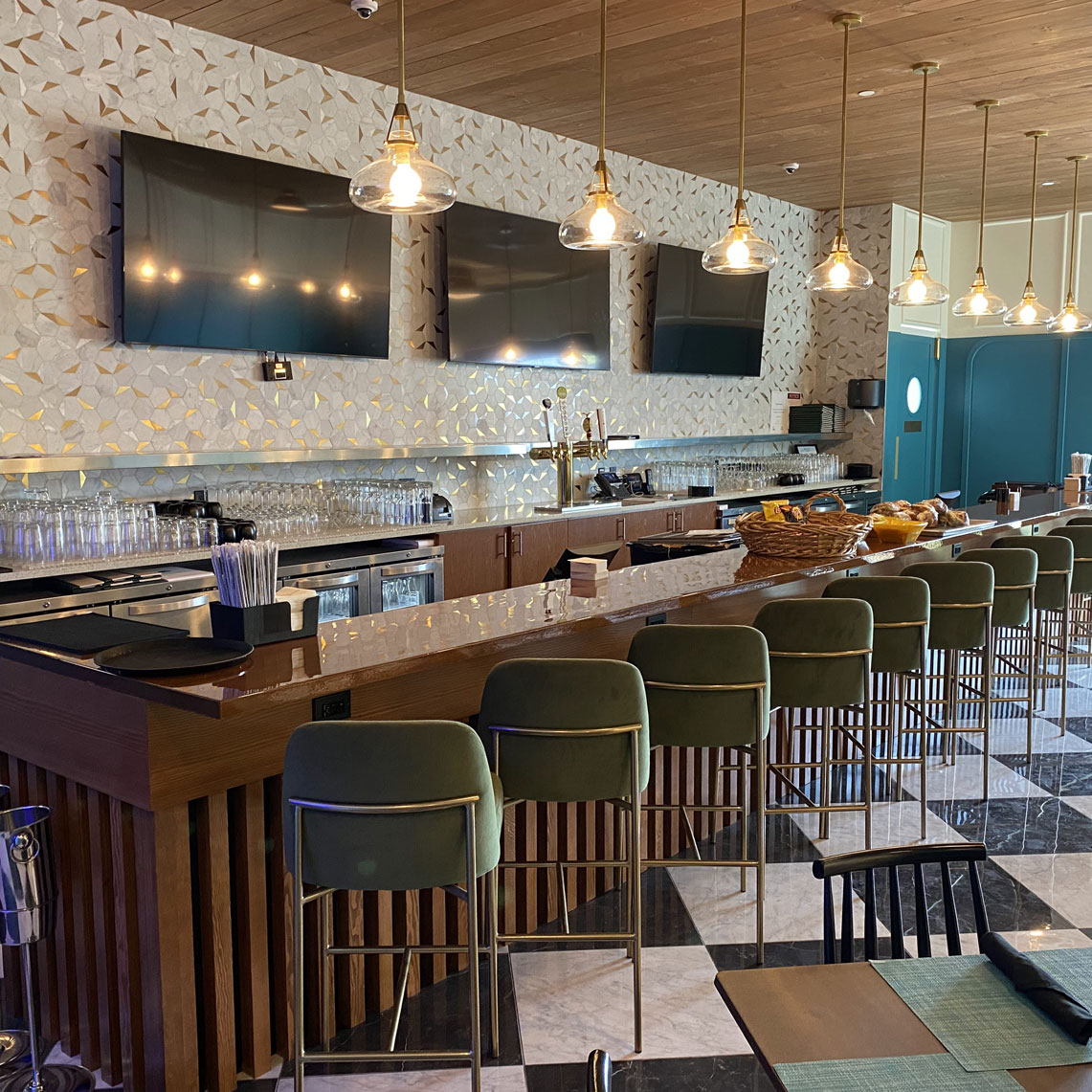
Walk into any restaurant and I can tell you within thirty seconds whether the millwork will last five years or fifteen.
It’s in the edges of the plywood. The way joints meet. The texture of the finish on bar tops.
These aren’t aesthetic choices. They’re structural decisions that determine whether your investment survives or becomes a maintenance nightmare.
The Material Truth Nobody Talks About
You can spot cheap millwork from across the room.
The edges tell the whole story. Building-grade plywood from Home Depot looks less refined because it is less refined. The core isn’t calibrated, which means thickness varies throughout the sheet.
Industrial-grade plywood has a calibrated core. Every sheet measures exactly what it claims to measure.
This matters more than most people realize. When you’re building cabinet boxes or wall panels, tolerances are tight. A sheet that’s supposed to be three-quarters of an inch but actually measures 0.71 inches in one spot and 0.78 inches in another creates gaps, misalignments, and stress points.
Those stress points become failure points in restaurant environments.
The plywood grading system ranges from A-grade (highest quality, perfect for clear finishing) to D-grade (structural purposes only). A1 hardwood plywood represents the top tier with consistent face veneers and calibrated cores.
Restaurant spaces are some of the harshest environments millwork faces. Food, drinks, spills, foot traffic. Wear and tear and abuse are abundant.
Building-grade materials weren’t designed for this. Industrial-grade materials were.
Where Millwork Actually Fails
I see the same failures repeatedly.
Shelving that bows and warps. Tables that become sticky despite regular cleaning. Edges knocked off benches and bar fronts. Finishes that wear through or deteriorate in high-contact areas.
The most telling failure: goods and foods getting into cracks and crevices, causing expansion and bowing.
This happens because someone didn’t seal the joints properly. Or they used the wrong substrate. Or they skipped steps to save time.
Restaurants operate under extreme conditions. Kitchen spaces experience dramatic temperature and humidity variations throughout daily operations. Dining areas face constant contact, spills, and cleaning chemicals.
The millwork has to accommodate wood movement, thermal expansion, and moisture cycling without compromising structural integrity.
Most contractors build restaurant millwork the same way they’d build residential cabinetry. That approach fails within three years.
The Finish Application Trap
Here’s where most people get it wrong.
They think more coats of finish means better protection. It doesn’t. After a certain point, additional coats actually counteract each other.
Finish thickness is measured in mils (one-thousandth of an inch). For water-based polyurethane, you need 3-5 mils per coat, with a minimum of four coats at 3-4 mils wet thickness for proper protection.
Apply it too thin and the finish won’t level properly. You get rough texture and inadequate protection.
Apply it too thick and it won’t dry correctly. Air bubbles get trapped. The finish may run. And when you stack too many coats, they start to lose their bond.
Six months into restaurant operations, over-applied finish starts peeling off. It looks like sores on the surface. You can literally peel it off in sheets.
The mil thickness specifications exist for a reason. When you reduce from the specified 1.0-1.5 mils down to 0.5 mils, you’ve cut film thickness by 32-50%. The protection drops proportionally.
Polyurethane coatings applied below minimum thickness crack or delaminate. The flexibility and cohesive strength aren’t there.
Different Surfaces Need Different Strategies
Not all millwork faces the same abuse.
Vertical panels like wall treatments might get wiped down monthly. Horizontal surfaces like bar tops get wiped down every hour, sometimes more frequently.
The finish strategy has to match the use case.
Bar finishes are harder, stronger, thicker. They’re designed to take constant contact with alcohol, cleaning chemicals, and aggressive wiping. The coating system is different from what you’d use on a wall panel.
It’s like washing your car. You wouldn’t use dish soap because it strips the protective wax. You use car wash because it’s compatible with automotive finishes.
The same logic applies to restaurant millwork. Different finishes require compatible cleaning products.
A good millwork contractor provides documentation at project completion showing exactly what cleaning products to use on each surface. Most don’t. The restaurant staff defaults to whatever commercial cleaner they have on hand.
Six months later, the bar top is sticky. The finish has broken down chemically. Now you need refinishing, which means downtime and lost revenue.
Construction Techniques That Actually Work
Eliminating cracks and crevices starts in the construction phase.
There’s no single answer. It takes proper substrates combined with proper finishing techniques to seal joints correctly.
You can use butt joints, but they have to be executed properly. The substrate matters. The adhesive matters. The finishing sequence matters.
Traditional mortise and tenon joints, reinforced with modern adhesives and mechanical fasteners, create connections that resist constant stress. Door opening, drawer sliding, equipment mounting. These actions create repetitive loads that weak joints can’t handle.
Corner bracing and internal support structures distribute loads across the entire assembly instead of concentrating stress at single points.
The integration of functional elements defines whether restaurant millwork succeeds. Built-in storage, equipment mounting systems, service access panels. These have to blend seamlessly with aesthetic requirements while enabling efficient operations.
Hidden hardware and soft-close mechanisms maintain clean visual lines. Modular components allow for repair and replacement without dismantling entire sections.
The Economics Nobody Calculates
The restaurant industry spends $28 billion annually on repair and maintenance costs, with an additional $46 billion lost to equipment and infrastructure downtime.
Most restaurants budget 1.5% to 3% of annual revenue for maintenance. Preventative maintenance saves up to 18% year-over-year compared to reactive approaches.
Yet when it comes to millwork, most owners focus exclusively on upfront costs.
Building-grade materials save money initially. Industrial-grade materials save money over time.
The difference shows up in replacement cycles. Cheap millwork needs replacement or major refinishing every three to five years. Quality millwork lasts ten to fifteen years with routine maintenance.
Emergency repairs cost two to three times more than scheduled maintenance. A restaurant closed for millwork repairs loses revenue every hour it’s not serving customers.
The investment in quality materials and construction techniques pays dividends through reduced replacement cycles and lower total cost of ownership.
Brand image matters too. Worn, deteriorating millwork affects customer perception. Consistent aesthetic presentation preserves brand value.
What To Actually Specify
Start with material selection based on zones.
Kitchen areas need materials that handle moisture, temperature fluctuations, and chemical exposure. Hardwoods like maple and oak offer natural wear resistance. Engineered materials provide consistent performance in high-moisture environments.
Dining areas balance durability with aesthetic appeal. Cherry, walnut, and other premium hardwoods work when properly finished and maintained.
Specify industrial-grade plywood with calibrated cores. Insist on A-grade or A1-grade materials for visible surfaces.
For finishes, match the coating system to the surface use. Bar tops and tables need commercial-grade polyurethane or specialized coatings designed for constant contact and chemical exposure. Vertical surfaces can use standard commercial finishes.
Require finish application within manufacturer specifications. Get the mil thickness in writing. Four coats at 3-4 mils wet thickness minimum for horizontal surfaces.
Demand proper joint construction. Butt joints are acceptable when executed correctly with proper substrates and sealing. Mortise and tenon joints for high-stress applications.
Require documentation for maintenance. Specific cleaning products for each surface type. Refinishing schedules. Repair procedures.
Build maintenance accessibility into the design. Restaurant millwork experiences accelerated wear compared to residential applications. Routine maintenance and periodic refinishing extend service life significantly.
Design features that facilitate easy access for cleaning, repair, and component replacement make the difference between millwork that lasts and millwork that fails.
The Real Cost Of Getting It Wrong
Poor millwork doesn’t just look bad. It creates operational problems.
Sticky tables slow service. Bowed shelving reduces storage capacity. Failed finishes require emergency repairs during peak seasons.
The restaurant closes for repairs. Revenue stops. Staff gets sent home. Customers go elsewhere.
A single refinishing project taking two to three hours can cause a 25% loss of profits for that day. Larger projects requiring multiple days compound the losses.
Meanwhile, the restaurant down the street with properly specified millwork operates without interruption. Their investment in quality materials and construction techniques pays for itself through avoided downtime and reduced maintenance costs.
The difference between millwork that lasts five years and millwork that lasts fifteen comes down to decisions made before construction begins.
Material selection. Finish specification. Construction techniques. Maintenance planning.
You can see these decisions in the edges of the plywood, the texture of the finish, and the way joints meet.
Walk into any restaurant and the millwork tells you everything you need to know about whether someone understood what they were building or just tried to save money upfront.
The harsh reality of restaurant environments reveals those decisions within three years.